

Setting the Stage
Runway is one of the leading Gen AI startups in the media space, developing models and tools for professional content production. In just a few years, Runway has become one of the companies in the Gen AI space working with some of the most prestigious Hollywood film studios.
Most recently, Runway raised a $308M Series D round at a $3B valuation led by General Atlantic, and is estimated to have reached a $300M revenue run rate by the end of 2025. Founded by Cristóbal Valenzuela, Alejandro Matamala, and Anastasis Germanidis who met at New York University, Runway enables film studios to reduce production costs and develop movies faster.
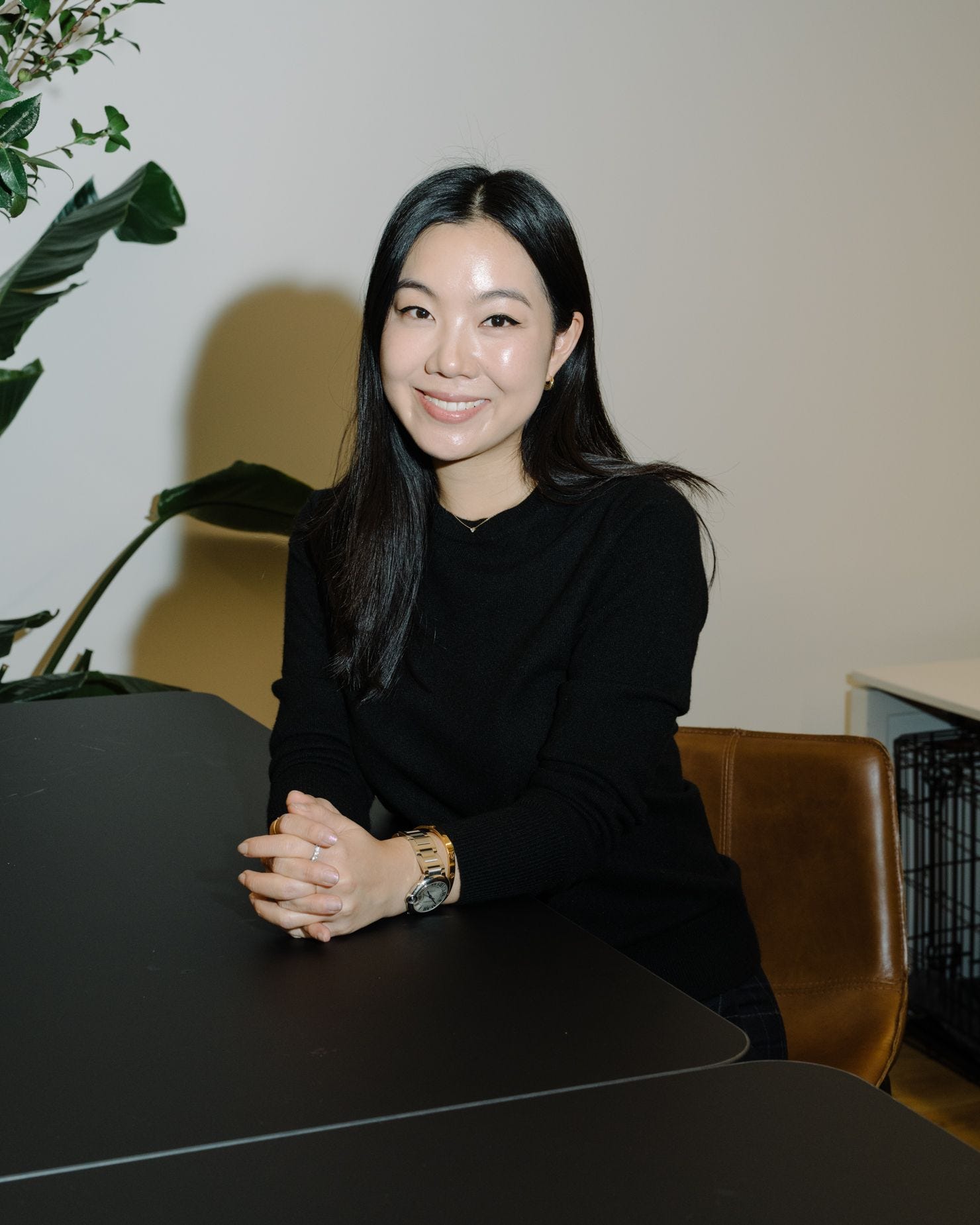
For this conversation, I sat with Michelle Kwon who joined Runway in early 2021, when it was just a six-person team. Over the past 5 years, Michelle helped turn Runway into one of the leading research companies in the Gen AI video space. Today, Michelle leads Operations and Partnerships at Runway as the company scales towards 150 people.
Michelle is also an active angel investor and, together with Lenny and Dan, runs the AirAngels syndicate and fund. She shares how angel investing has sharpened her perspective as an Operator.
As a fellow Airbnb alum, it has been great chatting with Michelle and learning from her journey building a company with proprietary AI-models. I hope you enjoy this issue as much as I did.
From Hedge Funds to Hollywood: Michelle's Path to Runway
Michelle started at a hedge fund in 2014, working with a portfolio manager making early investments in fintech unicorns and marketplaces. She was excited by the pace and trajectory of emerging tech companies.
When the opportunity came, Michelle applied online and landed a role at Airbnb as they were just preparing to roll out the Trips (today, Experiences) product:
“I felt in 2016, Airbnb was the company and the place to be. One of the things I really enjoyed was that Brian Chesky was so visible. He was constantly working in the area that the Trips team was sitting in. He was there on the weekends, with us, too.”
Michelle joined in Business Affairs, which was a cross-functional team that helped scale the cities and markets that Airbnb was going to launch in. She worked from pre-launch to successful expansion in multiple regions.
A few years later, she left Airbnb for business school and started working on the AirAngels syndicate, which turned into a formalized fund in 2020. Around the same time, Michelle got to know about Runway:
“I got introduced to Runway through one of our early investors, who said that I wasn’t really a fit, but recommended to chat with the founders nevertheless.”
Back in 2020, Runway was a small team of six people. Gen AI was in its infancy with little buzz to it. Still, Michelle saw something in the founding team, moved back to New York, and joined in the beginning of 2021 to set up all non-technical functions.
Joining Runway: Looking for Outliers
With the benefit of hindsight and today’s success, joining Runway seems like a no-brainer. However, when Michelle joined, the trajectory of the company was far less certain. Asked for a decision-framework, Michelle credits the mental model from Alfred Lin of Sequoia that she heard through the AirAngels speaker series:
“[Alfred] said, when they’re looking at a company to invest in, there’s product, team, and market. If each of those three things are good, investors will get, at best, average returns. One of those three things has to be an outlier, has to be something that is not prototypical or seems a little bit off. And that’s where you get real outlier returns.”
When Michelle interviewed with Runway, the outlier was clear: the founding team.
“The founders were all immigrants. They had no background in Silicon Valley or in tech, which was very similar to how it was with the Airbnb co-founders. When I was interviewing, I understood maybe 50% of what they were telling me. There was just so much terminology that I wasn’t familiar with.”
The technical depth was important to Michelle as she was looking for a company with unfair industry experience and a defensible moat. Even if the company did not work out, she’d get an incredible learning experience.

Life at Runway
Michelle joined as Head of Operations and Finance to build up all non-technical functions. She quickly realized she could only focus on one main priority at a time, so she changed from one critical business area to another. One of the first projects she tackled was hiring:
“When I first joined, we were desperately trying to hire engineers, and no engineer would answer our DMs or LinkedIn outreach. So I was our first recruiter and first Head of People.”
Michelle spent a large part of the first year on hiring while building foundational operations: from payroll to the first office, all the way to managing investor relations. Once the team realized hiring wasn’t moving fast enough, they brought in their first Head of People. Together, along with the three co-founders and Michelle, they formed the initial executive leadership team.
Working on the most pressing projects, then hiring for that function, has been a main theme of Michelle’s time at Runway:
“This pattern has repeated over the years: I figure out what the burning priorities for the business are, do the job myself for a while, and then bring in a senior person to lead that function.”
The same dynamic held true after the team raised a Series B in 2022 and started focusing much more on Marketing and PR. When Runway released their first paying product in early 2023, Michelle acted as the first salesperson before hiring a commercial team. After the successful Series C fundraise later in the same year, Michelle helped find the right candidate to bring the Finance and Legal functions to the next stage.
The Yearly Offsite
One of Michelle’s key learnings has been the importance of regularly stepping back to reassess how the company operates:
“We have a yearly offsite where we revisit how we run the company and how we’re organized. We’re still small, only around 150 people, but we have people who have just joined us, and we recently went through one of those reorgs. That’s a very scary term for a lot of people.”
Michelle, however, refers to reorgs in the best sense: staying nimble as the company grows. What worked at 10 people doesn’t work at 100 people. Michelle describes Runway as having “strong convictions, loosely held”. The team will test something, form an opinion, and if it doesn’t work, change it and try again:
“In the age of AI, speed is everything, so if the organization is not oriented in a way that allows you to run very quickly, make decisions, ship, test, do all the prototypical things, you won’t be successful.”
Adjusting Culture to the Business Reality
Coming from Airbnb where core values were deeply embedded, Michelle knew first-hand the importance of operating under the same assumptions. The Runway co-founders started out with eight core values, which ended up being excessive for a 20-person team. Later, they cut it to four, then evolved into a two-part framework:
Smart with Heart: Hire capable people who are genuinely good. No egos, no politics. People constantly chip in and help each other out.
Bias Towards Action: If you have an idea, just do it.
Michelle loves how Jensen Huang frames this: “He doesn’t wear a watch because the best time is now. We are already behind. We have to ship. We have to build.”
Runway’s recent success suggests the framework is working well in providing focus and clarity.
Partnerships as the GTM Engine
As Head of Operations and Partnerships, Michelle sits at a unique intersection. While many AI companies focus purely on direct sales, self-serve product-led growth or monetization via API, Runway has built a partnership-first approach that aligns well with their overall business strategy.
Michelle breaks partnerships into two categories:
First of Its Kind: Groundbreaking partnerships that create entirely new models. The Lionsgate partnership was the defining example as it was the first major Hollywood studio to partner with an AI company. The partnership combines a customer relationship with data licensing: Runway built a custom model trained on Lionsgate’s +20,000 title catalog (John Wick, Hunger Games), which Lionsgate filmmakers can then use.
Another first of its kind was the partnership with Canva that Runway published in 2023. APIs in the Gen AI space were not widely distributed yet, so Runway ensured the full availability of their video models to Canva customers. This also helped Runway develop their global API which is now the default.
“[The partnership with Lionsgate] was the first time a company like ours in the generative space and a large Hollywood institution partnered in that fashion. And that was really big. That has since spurred many other [partnerships] that we were able to rinse and repeat.”
Customer Plus: These are large enterprise customers where Runway goes well-beyond providing access to their API. Similar to Palantir and many other AI-companies, Runway uses a team called ‘forward-deployed creative’ to spend significant time helping customers understand the product, create assets, or specialize tooling. While many of those relationships are confidential, Netflix is known to have used Runway’s models in some of their recent productions.
Runway’s partnership-focused GTM-motion seems to work well as the company gains customers across verticals well beyond entertainment.
The Future: World Models and Real-Time Generation
Asked for Runway’s outlook for 2026 and major research breakthroughs in the Gen AI space, Michelle calls out two areas:
General World Models: Runway announced this initiative two years ago: building AI models that can simulate real-world scenarios. With Runway being the first company to make video models commercially available, the team has invested into being at the frontier of such models. Michelle expects a major jump in quality in the coming two years.
Real-Time Video Generation: When Runway launched their Gen-1 model in 2023, it took 3-4 minutes to generate a 4-second video. Today, it takes roughly 10 seconds to create a 15-second video. In the next 12 months, Michelle expects this to decrease to milliseconds with a large associated impact for Runway and its customers:
“Then you’re interacting with and are able to generate video as you’re going along. That really changes the way you can interact with the media.”
Michelle is confident that entirely new use cases would be unlocked - the same way that video generation models have reached the gaming space, for example.
To execute on that strategy, Runway is looking to extend their research- and engineering team, while continuing to make key GTM hires.
The Operator-Investor Flywheel
Michelle’s angel investing with AirAngels provides an interesting counterpoint to her operating role. With dozens of early-stage investments under her belt, she has seen hundreds of pitches.
On whether investing makes her a better operator:
“It does give me a lot of fire sometimes because I see that there are 100 companies that are building towards the same thing that we are trying to build, so we’ve got to move quickly.”
At the same time, Michelle shares that being a hands-on Operator has made her much more discerning in finding conviction for an investment:
“I’m much pickier [on angel investments] because there is just so much more context and understanding that I have. But sometimes ignorance is bliss. If you know too much, you tend to overanalyze.”
What she focuses on above all is founder obsession:
“They don’t have to be experts per se in what they’re doing, but I do think that an obsession with what you’re building is so important. You have to really be an outlier as a founder because the dedication it takes to run a business through highs and lows is a lot.”
With more Operators becoming angel investors and dedicated programs like First Round’s Angel Track to lend support and guidance, I found Michelle’s account very helpful.
Getting Feedback
To connect with fellow Operators, Michelle has been considering joining Molly Graham’s Glue Club. To date, however, Michelle’s best sounding board has been her partner:
“To be honest, my husband is my go-to partner. He does not work in startups but in Finance, so he analyzes businesses all the time. Companies that have gone public get a lot of scrutiny from investors, and there are some best-in-class examples. I’m not spending my time looking into that - that’s what my husband does. So he knows what great companies look like.”
That outside perspective less focused on the day-to-day operations but more on the bigger picture has been invaluable to Michelle as she has scaled herself with Runway.
Thank You
Thanks for reading this issue of The Operator.
I thoroughly enjoyed learning about Michelle’s path from Airbnb to Runway and her experience being an active angel investor. If Michelle’s journey resonated with you or sparked ideas about scaling operations in AI companies, I’d love to hear from you.
Big thanks to Michelle for taking the time to share her journey building Runway!
See you soon,
Jan
Among more, partnerships as GTM is really interesting! Thanks for sharing this!